
INSIGHTS
Thinking that challenges your next decision.
Perspectives on leadership, culture and the changing world of work, alongside news from Rokmind. Explore the reasoning, pause over a good question and find an idea to take into your own work.

EXPLORE AT YOUR OWN PACE
Pause over what matters.
Our experts explore current leadership questions, examine ways of working and share practical observations. Start with the latest posts or find the topic on your mind. Use the filters to find news and updates from Rokmind.
Posts
Lue. Pysähdy. Jaa ajatus.
A leader’s time to think: who sets the direction if you have no time to reflect?
A leader must respond to what demands attention and notice what nobody is asking yet. Protected time for thinking, examining one’s own reasoning and recovering belongs within leadership work, rather than becoming an extra task afterwards.

Melina Näätänen · CEO of Rokmind
A leader’s role is to respond to what demands attention and to notice what nobody is asking yet. Protected time for thinking, examining one’s own reasoning and recovering belongs within leadership work, rather than becoming an extra task afterwards.
Imagine a leader whose day goes perfectly. Messages are answered. Meetings finish on time. Exceptions are resolved. Yet in the evening, they cannot say what new thinking about the company’s future has taken place.
Everything that reached the calendar had a sender, a deadline or an advocate. The question nobody had yet thought to ask had no one.
Johtajan älyaika is Rokmind’s term for protected space in which a leader thinks about what matters, examines their own thinking and sometimes steps away from actively solving problems.
It is not a reward after an efficiently managed day. It is part of the work a leader is paid to do: understand, analyse, choose and lead in matters that do not arrive ready-made on a task list.
Think about the matter, rather than simply processing it
You do not need to arrive at this thinking time empty-handed. Choose a question whose resolution has consequences. Why does a customer buy again? Why do two units interpret the same objective differently? Which decision have we postponed by gathering more information?
The aim is not to generate as many ideas as possible. Sometimes the most important outcome is to recognise that we have defined the problem incorrectly.
In an imaginary company, slowing sales initially appear to reflect insufficient activity. More customer contacts are proposed. When customer feedback and delivery promises are examined together, however, it becomes clear that customers are waiting for delivery reliability to improve before placing new orders. More selling alone will not remove the obstacle to growth.
Time to think does not mean postponing decisions indefinitely. Reflection needs to be accompanied by a question about what we do next. What information is missing, who will obtain it and when will the decision be made?
Think about your thinking too
The next question concerns both the business and the way you assess it. What am I taking for granted here? Am I defending a choice because the evidence supports it, or because I helped make it?
In this thinking time, metacognition, or examining one’s own thinking, involves a practical distinction: what is my observation, what is my interpretation of it, and what information could change that interpretation? Continuing the same inner conversation for longer does not yet amount to examining it.
There is research evidence for structured debriefs. Tannenbaum and Cerasoli’s meta-analysis brought together 46 samples. Systematically reviewing experience improved individual and team performance on average compared with control groups. The research concerned structured debriefs, not an unstructured hour of thinking. [1]
Applied to leadership, the central question is whether we merely revisit events or use them to examine our reasoning. After a difficult decision, it is not enough to ask whether the outcome was right. We should also ask which parts of the reasoning held up and which did not.
Sometimes, solve nothing at all
The third mode is not deeper analysis. It is a temporary release from work’s demand for solutions. A walk without audio. Looking up from the screen. A moment in which no observation needs to become an output immediately.
Albulescu and colleagues’ meta-analysis brought together findings on short breaks from 22 independent samples. Breaks had small positive average effects on vigour and fatigue. The overall effect on performance was not statistically significant. Feeling refreshed and achieving a better result are therefore different things. [2]
Detachment from work during leisure time has, in turn, been associated with lower exhaustion and better perceived sleep. Wendsche and Lohmann-Haislah’s meta-analysis primarily concerns associations. It does not tell us how quickly a particular leader recovers between two meetings. [3]
A break within this protected time is therefore not required to produce an immediate insight. It does not have to earn its place by making the next decision faster.
A quieter mind is not a performance target
At best, the inner commentary about performing may quieten for a moment. From Rokmind’s perspective, however, this should not become a new requirement: a good leader does not have to be able to think about nothing on command.
A 2025 neurocognitive review examines so-called mind blanking experiences, in which a person reports no specific thought content. The researchers emphasise the conceptual diversity of the phenomenon. The review does not establish a thought-free state as a recovery technique for leaders. [4]
The aim is therefore to have permission sometimes to stop solving, rather than to achieve a particular state of mind. A thought appearing does not mean a break has failed. If settling down is not possible right now, the conditions need examining rather than the person receiving another score.
The organisation also has responsibility for thinking time
A leader cannot resolve a lack of thinking time simply by reserving an hour in the calendar if all the existing work awaits them in the evening. Nor should protecting space for personal thinking mean transferring pressure to others.
The Finnish Institute of Occupational Health’s approach to cognitive ergonomics designs work to fit human information processing. Distractions, interruptions and information overload are also reduced through shared practices, rather than solely by developing an individual’s ability to concentrate. [5]
In practice, people need to agree which matters can wait, who can decide in the leader’s absence and what truly justifies an interruption. The same conditions for thoughtful work should also be available to other specialists, not only senior management.
The owner and board can ask whether management has room to assess the company’s direction. The executive team can agree which matters it will no longer escalate unnecessarily to the CEO. HR can help identify where work demands, responsibilities and available time conflict.
Good leadership does not mean being able to recover endlessly from poorly organised work.
The capacity to withstand pressure should not be defined solely as the ability to continue. Leadership also requires recognising when the cause of the pressure must change. Protected thinking time becomes credible only when space is made for it through responsibilities, expectations and shared practices.
Make space. Do not add another task.
The first step could be one protected period for thinking in the coming week. Choose a duration that fits your situation. Begin, however, with what you will remove or move, rather than what you can squeeze into an already full day.
Before: choose one meaningful question and gather the material needed to consider it. Agree who will handle urgent matters and on what grounds you may be interrupted.
During: write down observations, interpretations and assumptions separately. Identify the information that would make you think differently. Where useful, think with someone who sees the situation from another angle. Also allow a moment in which you are not trying to solve the question.
Afterwards: record what you understood differently and how it changes the next decision. If the question remains open, identify the next matter to investigate. Thinking does not always need to produce an immediate result.
This is Rokmind’s practical suggestion for trying protected thinking time. It is not a research-defined prescription for breaks or a validated assessment method.
The value of a leader’s thinking time should not be assessed solely by how much thinking was done. What matters more is what became visible, what could be let go and what can subsequently be led differently.
Which important question in your company has nobody to think about it because no one has room?
Sources
Johtajan älyaika is Rokmind’s own concept. The research sources concern structured reflection, breaks, detachment from work, experiences of the mind and cognitive ergonomics. They are not studies of the effects of the Johtajan älyaika concept.
[1] Tannenbaum, S. I. & Cerasoli, C. P. (2013). Do Team and Individual Debriefs Enhance Performance? A Meta-Analysis. Human Factors, 55(1), 231–245.
[2] Albulescu, P. et al. (2022). “Give me a break!” A systematic review and meta-analysis on the efficacy of micro-breaks for increasing well-being and performance. PLOS ONE, 17(8), e0272460.
[3] Wendsche, J. & Lohmann-Haislah, A. (2017). A Meta-Analysis on Antecedents and Outcomes of Detachment from Work. Frontiers in Psychology, 7, 2072.
[4] Andrillon, T., Lutz, A., Windt, J. & Demertzi, A. (2025). Where is my mind? A neurocognitive investigation of mind blanking. Trends in Cognitive Sciences, 29(7), 600–613.
[5] Finnish Institute of Occupational Health. Aivotyö sujuvaksi (in Finnish). A knowledge resource on cognitive ergonomics.

When is the right time to grow?
You can postpone a development programme until the next budget. Opportunities to grow, however, arise in today’s situations. That is why a learning culture cannot be built on training days alone.
Jari Hellstén · Senior Executive Coach
“Let’s look at it after Christmas.” “Let’s get the holidays out of the way first.” “We have a few other things on our plate.” “Let’s put it in the next budget.”
Familiar reasons for leaving something we consider important until a better time. We are so busy that we cannot make room for development. We run alongside the bicycle instead of getting into the saddle.
But when, exactly, is that better time?
Development can be organised. Growth happens.
The title deliberately refers to growing, rather than organising development. Development initiatives, training and coaching can be arranged and budgeted for. Opportunities to grow arise in ordinary, everyday situations.
We constantly encounter things that add to our store of experience. Not every insight requires a dedicated training day. We also need a culture in which small observations are noticed, experiences are examined and space is made for what we learn through everyday work.
Over time, this can strengthen an organisation’s collective knowledge and capability. What matters is not only how much development activity is organised, but also what people experience and come to understand in their own work.
Learning must go beyond remembering
In traditional schooling, learning has often meant remembering individual facts and reproducing them in answers. A collection of disconnected facts does not yet tell us how well we can use what we have learned.
For growth, the culture into which new knowledge arrives is crucial. Are we open to it? Are we also willing to question it and judge which parts are useful to us?
We need not repeat ideas from outside simply because they sound convincing. Equally, we should not reject useful new knowledge merely because we are used to doing things differently. We need to understand what our particular situation calls for, and be willing to act on it without unnecessary delay.
We grow as people through experience
One way of considering human existence is to distinguish three interwoven dimensions: embodiment, consciousness and our relationship with the circumstances of our lives.
Embodiment concerns our bodies and how they function. Our relationship with circumstances describes how we are situated in the life we are living. The perspective of consciousness directs attention to our experiences and to how we can also reflect on our own thoughts.
Have you ever caught yourself saying, “That was a foolish way to think”? At that moment, you are not simply thinking about something. You are also noticing your own thinking and can pause to examine it.
These dimensions of being human are not separate from one another. An experience always arises in a particular situation. That is precisely where an opportunity may emerge to see something differently or act in a new way.
Life presents us with opportunities to find meaning: situations that may be the beginning of a new insight. We cannot always defer them to the next budget. The same experience and the same opportunity may not be waiting there.
The right moment cannot always be booked in a calendar
The central point of this article is simple: action and growth take place in the present. Right now.
The moment may be carefully planned and organised. It may also arrive unexpectedly, even at a service-station washbasin, when you only work out how an unfamiliar tap operates after getting wet. We are in the midst of an experience and, at the same time, open to discovering something new.
A culture of learning and growth needs both: planned, systematic development and room for spontaneous insight. There is no need to abandon training days. Alongside them, it is worth noticing what everyday life already offers.
After Christmas, there will be new moments and new opportunities. But today’s opportunity can only be taken today.
What could we discover or do differently in the situation we are in right now?
Meet Jari Hellstén and explore his expertise.
This article is based on Jari Hellstén’s blog post published on 28 November 2024. It has been edited for Rokmind’s website with the author’s permission. Read the original article in Finnish.

Pay transparency does not threaten your pay system. It threatens poor leadership.
Pay transparency reveals far more than pay differences. It exposes how consistently an organisation defines responsibilities, assesses performance and explains reward decisions. That makes it a test of leadership quality.
Pay transparency is a test of leadership quality, rather than simply of the pay system. It quickly reveals whether an organisation’s roles, responsibilities, performance assessment and reward criteria are truly up to date or still rely on old structures.
Ultimately, the most important question is not what people are paid, but whether the organisation can explain its decisions consistently and demonstrate that it rewards the things it says it values.
1. Pay transparency reveals differences in leadership as well as pay.
When an employee asks how their pay is determined, they should not receive different answers from HR, their manager and a senior leader. If they do, the problem may lie in the consistency of leadership rather than the level of pay.
Above all, pay transparency tests an organisation’s ability to justify its decisions using the same reasoning for everyone.
2. The organisation chart may look tidy, but is pay based on the actual work or on old job titles?
In many companies, the content of work, responsibilities and impact have changed significantly, while job descriptions and pay structures still belong to the past.
Pay transparency forces an updated understanding of which work actually creates value for the company.
3. Strategy describes what a company says it values. Pay decisions reveal the truth.
Cooperation, responsibility, learning and customer focus appear in almost every company’s values. But do they also appear in its rewards?
Pay transparency brings possible contradictions between words and actions into view. Ultimately, pay decisions reveal what an organisation truly values.
When the reasoning behind pay decisions becomes visible, scrutiny extends beyond pay itself. Leaders’ choices, managers’ judgement and the organisation’s actual values also come under examination.
Pay transparency does not create unfairness. It makes it visible.
Pay transparency changes more than reward practices. It requires organisations to show how decisions are actually made.
At the same time, it distinguishes organisations whose leadership rests on shared, consistent principles from those where decisions still depend too heavily on individual interpretations.
Jari Hellstén
Senior Executive Coach
jari@rokmind.fi
+358 40 671 9581

The executive team’s average may conceal exactly what needs discussing
An average offers a useful overview of how an executive team is working. Sometimes, however, the most important insight lies in how differently people around the same table experience that team.
When assessing an executive team, attention easily turns to averages.
How highly do team members rate cooperation? What about trust, decision-making, openness or the use of their time together?
An average is useful. It quickly offers an overview of how the executive team appears to be working.
But sometimes the information that matters most to the team lies elsewhere.
In how differently people sitting around the same table experience the same executive team.
The same executive team, two very different experiences
Imagine an executive team whose members rate open discussion reasonably highly.
The average looks good.
On that basis, you might conclude that openness is not among the team’s most urgent development priorities.
But the average can conceal a very different reality.
Some members may feel that even difficult matters can be raised, the CEO can be challenged and unfinished ideas can safely be brought into the discussion.
Others in the same team may think carefully about when it is worth speaking, what is worth challenging and how strongly they dare express their view.
Both are answering the same question.
Both are describing the same executive team.
And both may be right.
That is precisely why an average is not always enough.
Variation is not a statistical footnote
Rokmind’s Leadership Team Success Index™ (LTSI) examines executive team effectiveness from several perspectives. Alongside the current and ideal situation, important information may lie in how similar or different team members’ experiences are.
A wide spread of responses does not in itself indicate a problem in the executive team.
Nor does it explain the cause of a problem.
But it tells us something that leaders should take seriously:
We do not experience this executive team’s work in the same way.
That is where an interesting conversation begins.
Why do our experiences differ?
In which situations do the differences become visible?
Are they connected to the subject being discussed, roles, interaction, power, decision-making or who raises the matter?
Who finds it easy to bring their perspective into the shared discussion?
Who has to work harder to be heard?
The lowest rating does not necessarily point to a problem with the person
When one executive team member’s assessment differs clearly from everyone else’s, an understandable interpretation readily follows:
Why do they experience it that way?
The question may be justified, but it can also direct attention too quickly towards the individual.
What if the more interesting question were:
What happens in the way the executive team works that leads them to experience it that way?
People in an executive team have different roles, responsibilities, histories, behavioural styles and relationships with one another. Their experiences do not therefore have to be identical.
But this is also why a different experience should not automatically be explained by personality.
If one or two people repeatedly feel there is no room for constructive criticism, that their perspective is not heard or that shared decisions are not truly built together, this may be an individual experience.
Or it may be the first visible signal of something the average cannot show.
Even the highest rating does not prove that the approach works for everyone
The same applies at the other end of the scale.
If someone rates the team’s openness, trust or cooperation as excellent, that describes their experience.
It does not yet show that the same environment works equally well for everyone.
This is an important distinction in executive team development.
The team does not need to create an environment in which everyone thinks alike.
Quite the opposite.
A good executive team should be able to use different perspectives, expertise and ways of understanding the business.
The interesting question is therefore not only:
How satisfied are we with our executive team?
It is also:
How well can this executive team make use of different perspectives when they matter?
This is where variation becomes a business question
Openness and being heard can easily be treated as so-called soft issues.
From the executive team’s perspective, they are not.
If relevant information does not reach the shared discussion, the team makes decisions on a narrower information base than it has available.
If presenting a critical perspective is easy for some and difficult for others, the team may not be making use of all its expertise.
If participation depends on status, personality or the ability to take up space, the loudest perspective may receive more weight than the one that best serves the business.
We are then discussing more than the atmosphere within the executive team.
We are discussing the quality of its decisions.
And ultimately, the information on which the company is led.
The goal of executive team development is not the highest possible score
A measure can start a conversation, but improving the measure should not become an end in itself.
The goal is not to make everyone assess the executive team in the same way.
Nor is it to raise every score as high as possible.
The goal is to understand what is happening behind the numbers.
If the average improves because the team learns to discuss difficult matters more openly, that is good.
If it improves because decisions become clearer, trust stronger and members’ expertise more available to the whole team, better still.
But if the average improves because the most critical voices tire of challenging and learn to fit in, the team has not developed.
It has merely become quieter.
That is why the report is only the beginning of the conversation
The value of LTSI does not come from an individual number or report.
It comes from what the executive team does with the information made visible.
When results show variation, useful questions might include:
– Where do our experiences differ most?
– What happens in these situations in practice?
– Whose perspectives readily enter the shared discussion?
– Which perspectives are more easily left aside?
– Is there something in our way of working that serves some people well and others poorly?
– What might this mean for the quality of our decisions?
Measurement then becomes more than a judgement of the executive team.
It becomes a way to make the invisible discussable.
Perhaps the most interesting executive team figure is not the average
A shared understanding of the executive team’s situation matters.
But a shared understanding does not require everyone to see everything in the same way.
Sometimes the difference in perspective is the most important finding.
It may reveal features of the discussion culture, power, roles or working practices that the average smooths out of sight.
When examining an executive team’s results, it is therefore worth asking, alongside the average:
Where do our experiences differ, and what is that difference trying to tell us?
A better average is an insufficient goal for executive team development if it is achieved only by learning to remain silent.
A better goal is an executive team in which a dissenting view also becomes part of the information used to lead the company.
Melina "Mellu" Näätänen
CEO

Pay transparency is more than an HR project: it tests the quality of leadership
When an employee asks, “Why am I paid this amount?”, can the organisation answer clearly and consistently, using the same reasoning whoever responds?
Pay transparency is more than an HR project: it tests the quality of leadership
As new regulation approaches, a familiar process often begins: HR reads the legislation, payroll checks the data, lawyers assess the obligations and management waits for a summary.
All of this is necessary. For pay transparency, however, it is not enough.
At Rokmind, we believe pay transparency belongs directly on the leadership agenda. It makes visible how an organisation values work, determines pay, manages performance and explains decisions.
In other words, pay transparency tests the entire management system as well as the pay system.
The real test fits into one question
When an employee asks, “Why am I paid this amount?”, can the organisation answer clearly and consistently, using the same reasoning whoever responds?
If the answer varies according to the manager, unit, location or historical practice, the challenge extends beyond communication. It suggests that the reasoning behind decisions is not yet shared.
Pay transparency does not mean that everyone must be paid the same or that individual salaries will be published for all to see. Justified pay differences can and should exist.
Their basis must, however, be visible, understandable and consistently applied.
Three systems become visible
A pay decision becomes credible only when three elements tell the same story.
The first is the value of the work.
The organisation must be able to describe what the work actually involves and how its demands are assessed. A job title alone is insufficient. Relevant factors include the expertise required, responsibility, impact, independence, problem-solving, workload and working conditions.
This gives job descriptions renewed importance. If jobs have changed but their descriptions have not, comparisons between roles and explanations for pay decisions can easily rest on the wrong foundations.
The second element is the logic of pay.
Can we break total pay into understandable components? What rests on a collective agreement or starting level, what on the demands of the role, what on personal competence or performance, and what on different supplements or local arrangements?
Each component needs at least four things: a criterion, supporting information, agreed decision-making authority and the ability to discuss the decision.
A pay difference may be entirely justified. Its explanation should not, however, rest on a general impression of a person or the phrase: “That is how we have always done it.”
The third element is everyday leadership.
Pay transparency shifts pressure from the system into the conversation. A manager needs to connect the pay decision to agreed criteria, listen to the employee’s experience and address differing perspectives.
A legal instruction alone will not create this capability.
Managers need shared language, calibration, practical rehearsal and the confidence to have difficult conversations. Otherwise, the same system can produce very different decisions across the organisation.
There is no need to wait for the final wording of the law
In Finland, Government Proposal HE 129/2026 vp on pay transparency is under parliamentary consideration. The proposal envisages the changes taking effect on 1 January 2027, but the content and timetable may still change.
This does not mean organisations should wait.
Preparation can begin with work that will remain useful even if individual provisions change:
- Make current job descriptions, pay models, decision-making and data visible.
- Test comparison groups, pay criteria, exceptions and possible unexplained differences.
- Prepare a correction process, a shared approach for managers and communications.
This work is about more than meeting a future obligation. It can also clarify leadership, reduce arbitrary decisions and strengthen trust.
Openness can support leadership
Poorly prepared pay transparency can increase uncertainty, perceptions of unfairness and difficult conversations.
When well led, it can do the opposite.
It can help an organisation articulate what is expected of work, what is valued, how performance is assessed and how decisions are made. It also requires examination of historical practices and exceptions that people may not have dared to challenge for a long time.
Rokmind’s Jari Hellstén will explore this perspective in a presentation to Puutuoteteollisuus on 17 September. Jari’s extensive experience of performance-based pay systems and demanding People & Culture transformations brings an important combination to the discussion: an analytical understanding of structures and the human side of change.
At Rokmind, we see systems and technology as tools. Ultimately, people, leadership practices and the organisation’s everyday work determine the outcome of change.
The law may still change. The need for clear reasoning behind pay does not.
Leaders can start with one question:
Which parts of our pay logic already stand up to scrutiny, and where do the system and everyday practice still tell different stories?
This article reflects the situation on 7 September 2026. HE 129/2026 vp is a government proposal whose content and timetable may change during parliamentary consideration. This article is not a legal opinion.
Sources: Government Proposal HE 129/2026 vp and Directive (EU) 2023/970.
CEO
Melina "Mellu" Näätänen
&
Senior Executive Coach
Jari Hellstén

An executive team’s busyness may be a result of how it works
An executive team can be so busy resolving the organisation’s problems that it has no time to notice its own part in creating them. What if some of the pressure arises from how the team itself works?
An executive team’s busyness may be a result of how it works
An executive team can be so busy resolving the organisation’s problems that it has no time to notice its own part in creating them. The same matters return to the table, decisions move slowly and too little time remains for strategic thinking. Improving the team’s own work is postponed until the pressure eases.
But what if some of that pressure arises from how the team itself works?
Taking time to reflect then deserves consideration from a business perspective too. Unclear priorities, incomplete decisions and conflicting expectations can consume time across the company. A moment saved in the executive team’s calendar may become clarification, waiting and rework in other people’s calendars.
An unclear decision continues its work after the meeting
If one executive team member regards a meeting discussion as a decision, another as further preparation and a third as a matter left to their unit’s discretion, each may believe they are acting responsibly. Shared execution can nevertheless fragment before the work has properly begun.
The organisation receives different messages from different directions. Managers try to reconcile them. Some people wait for permission while others begin implementation. When the matter returns to the executive team, the problem may be described as poor execution or a lack of commitment.
It is then worth asking how ready for implementation the original decision actually was.
This is an important leadership distinction. If an unclear decision is met with more monitoring and reporting, the workload may increase without addressing the point where the ambiguity arose. A well-intentioned solution adds work for both the executive team and the rest of the organisation.
The same meeting can create different pictures of cooperation
Executive team members can have very different understandings of their shared work. For one, a quick discussion means agility. For another, it means insufficient time to assess alternatives properly. The chair may feel they are giving people considerable responsibility while a member wants greater clarity about what they can decide independently.
These differences are difficult to address if personal experience is assumed to represent a shared picture of the situation.
A positive atmosphere and a properly completed agenda also leave much unanswered. Was the group’s expertise used? Were important disagreements addressed? Do people leave the meeting knowing what will be done and what will be stopped?
The quality of the executive team’s work should also be considered from the perspective of those who must act on its decisions. For them, what matters is whether the team produces sufficient clarity for the work to be done.
What does LTSI help reveal?
Rokmind’s Leadership Team Success Index™ (LTSI) is a method developed by Professor of Practice Helena Åhman, DSc (Tech). It examines the executive team’s current work and desired ideal situation through self-assessments and interviews.
The review covers areas including the executive team’s work and impact, cooperation with the board, the behaviour of the chair and members, and organisational culture. The results are discussed together and used to build the team’s development plan.
The responses describe how people see their work together. They help clarify what works, what is expected of the executive team and where development should focus. Differing perspectives also provide grounds for an important conversation.
I am particularly interested in the questions people dare to ask when considering the results. Why does the same practice help one person succeed and make another person’s work harder? What have we become accustomed to accepting even though it no longer serves the company’s objectives?
Courage is visible in what we are willing to change
Examining your own executive team’s work is personal. Your decisions, habits and understanding of good leadership are involved. The first reaction to a difficult finding may therefore be to explain it away: this is due to the situation, the workload or someone not understanding the whole picture.
Sometimes the explanation may be correct. Even so, the finding deserves examination before being dismissed.
Pausing requires a willingness to hear things that do not fit your own view of how well the group works. The chair shares responsibility for this. If the executive team expects the organisation to learn and change, it must be able to examine its own practices with the same expectations.
The team need not wait for a crisis. Improving its own work is already justified when it wants to make better use of its expertise or prepare for the company’s next phase.
Change must be noticeable in daily work
Measurement needs to be followed by choices: what will we change, who will ensure progress and how will we know whether the change helps?
If clarity of decisions emerges as a development priority, the executive team might agree to specify the objective, responsibility, authority and follow-up for every decision. It can also check that members understand the decision in the same way before taking it into the organisation.
Later, the team can examine whether ambiguities had to be revisited, whether conflicting instructions caused rework and whether those implementing decisions received the information they needed. This connects development to the flow of work.
The value of pausing may be visible in what the rest of the organisation no longer has to clarify, wait for or correct. That is why developing the executive team’s own work deserves a place in the calendar even during busy periods.
If this reflects your executive team’s daily experience, contact mellu@rokmind.fi. Let’s discuss what would be useful to understand and how LTSI and working together could help you move forward.
CEO
Melina "Mellu" Näätänen
mellu@rokmind.fi
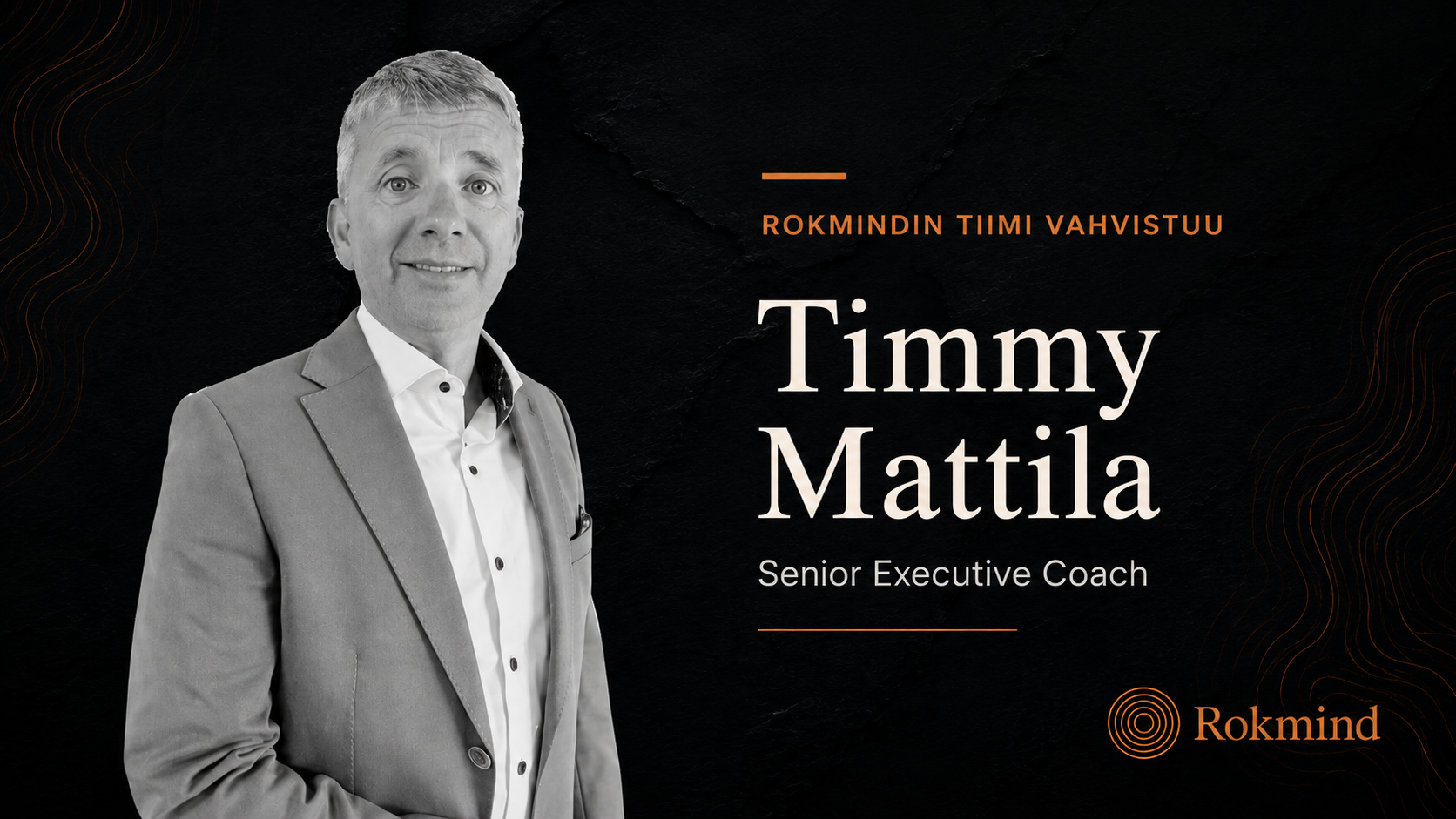
Timmy Mattila joins Rokmind as Senior Executive Coach
Experienced sales, leadership and business development coach Timmy Mattila has joined Rokmind as Senior Executive Coach. He helps leaders, managers and teams turn strategic objectives into clear everyday choices, effective practices and sustainable results.
Growth through trust, strategy through action: Timmy Mattila joins Rokmind
Rokmind’s coaching team is strengthened by an experienced professional in sales, leadership and business development. Joining as Senior Executive Coach, Timmy Mattila helps leaders, managers and teams turn strategic objectives into clear choices, effective practices and results visible in daily work.
Growth does not come from a single campaign, a new target or a brief surge of enthusiasm.
It comes from what an organisation does repeatedly: how it clarifies direction, leads towards objectives, involves people and creates customer value in every interaction.
This is where Timmy Mattila’s particular strength lies. He combines commercial thinking, a coaching approach to leadership and people’s commitment in a way that helps an organisation move from plans to practical action.
Leading sales means leading everyday work
Good sales leadership goes beyond setting targets and monitoring figures. It also means clarifying a shared direction, prioritising work, coaching people and building practices that support success day after day.
Timmy helps leaders and managers make the practical requirements for success visible:
- what to focus on now
- how to turn objectives into understandable action
- how to coach and develop people in daily work
- how to strengthen cooperation and ownership
- how to put decisions consistently into practice
The aim is to build a clearer way to lead the work, without adding disconnected processes, so that people understand the direction and can take responsibility for their own success.
Nearly 20 years of responsibility for business and people
Timmy’s coaching approach is grounded in extensive practical experience in banking and finance.
He has worked at Danske Bank as a branch manager and investment director, with responsibility for business development, sales leadership and employee development. Nearly 20 years of experience bring a strong understanding of demanding leadership situations, business growth and delivering change.
Timmy understands situations where objectives are ambitious, the environment is changing and a leader must look after both results and people’s ability to succeed.
As a coach, he helps clients identify what is slowing change in practice. The obstacle is not always a lack of competence. It may be an unclear direction, competing priorities, an ineffective leadership rhythm or a lack of shared working practices.
Making these matters visible creates the basis for solutions that support both business results and people-centred leadership.
Sustainable growth is built on trust
Timmy also has substantial experience in developing strategic partnerships and sales channels.
In his view, growth means more than acquiring new customers. Sustainable growth also rests on customer satisfaction, trust and customers wanting to continue the relationship and recommend the company to others.
This requires the organisation to share an approach to customer work. Customer needs must be understood, promises fulfilled and the customer experience consistent across interactions and channels.
Timmy helps organisations examine sales as a whole:
- how customer trust is built
- how customer relationships are developed over time
- how different sales channels support a shared objective
- how customer satisfaction becomes a source of growth
- how successful practices become repeatable
Sales then rests on more than individual exceptional performances: the organisation builds a shared, lasting capability to create value for customers.
Commercial thinking and a coaching approach to leadership together
Timmy’s work brings results and a focus on people together.
A coaching approach to leadership does not mean abandoning objectives or avoiding difficult matters. It means a clear direction, effective interaction and people participating in the development of their own work and shared practices.
When people understand what they are working towards and why, they can more easily make sound choices independently. At the same time, the leader’s role moves beyond monitoring towards creating the conditions for success.
Timmy helps leaders strengthen this capability. Coaching takes the principles of good leadership into participants’ own situations, objectives and customer work.
The aim is for clients to gain new perspectives and clear approaches that become visible in everyday leadership, cooperation and results.
Melina Näätänen: “Timmy combines a focus on objectives with a real ability to connect with people”
What I particularly value in Timmy is his ability to combine commercial sharpness with a coaching approach to leadership. He can talk about results without people disappearing behind the numbers, and about people without losing sight of the objectives. Timmy brings Rokmind extensive experience, a calm approach and a practical understanding of how to turn strategy into everyday action.
Melina “Mellu” Näätänen
CEO and founder, Rokmind
Timmy at Rokmind
At Rokmind, Timmy focuses particularly on:
- sales leadership
- a coaching approach to leadership
- strategy execution
- change leadership
- developing organisational culture
- strategic partnerships and customer relationship development
His work particularly benefits leaders, managers and teams who want to clarify their direction, strengthen sales leadership and build growth over the long term.
Outside work, Timmy is a passionate tennis player, as well as a former competitive player and coach.
A warm welcome to Rokmind, Timmy!
Contact details
Timmy Mattila
Senior Executive Coach
timmy@rokmind.fi
+358 50 422 1529
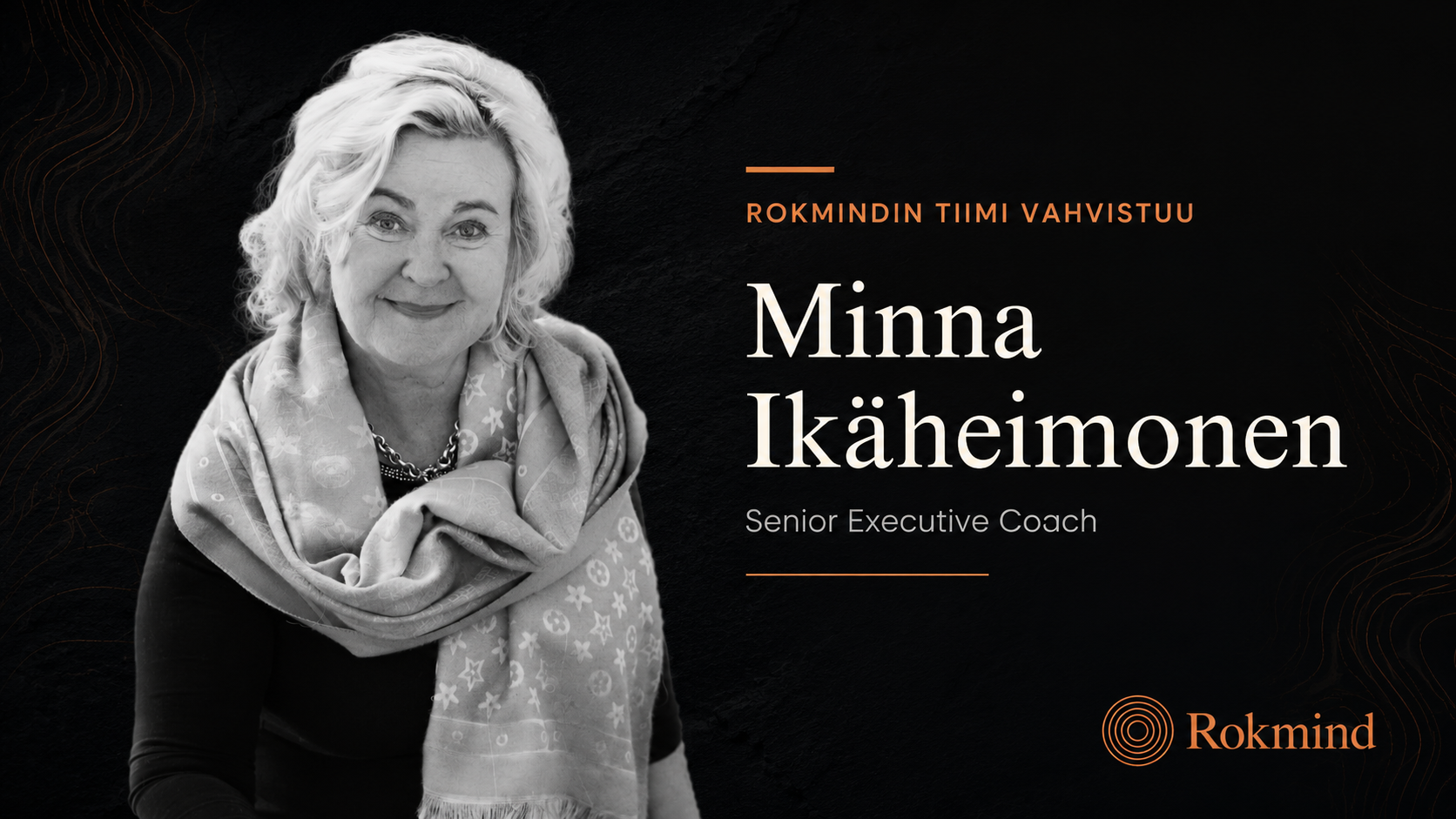
Minna Ikäheimonen joins Rokmind
Experienced business leader, entrepreneur and coach Minna Ikäheimonen strengthens Rokmind’s team in leadership, growth and change.
Building growth and coaching change: Minna Ikäheimonen joins Rokmind
Rokmind’s coaching team is strengthened by an experienced business leader, entrepreneur and coach. Joining as Senior Executive Coach, Minna Ikäheimonen helps leaders, entrepreneurs and specialists clarify direction, build growth and turn change into practical action.
Organisations talk a great deal about growth, renewal and change. Real change, however, requires more than a good strategy or a new plan.
It emerges from how people understand the shared direction, the decisions made in daily work and how new practices become part of everyday activity.
This combination is also Minna Ikäheimonen’s particular strength. She examines growth simultaneously from the perspectives of the business, leadership and people.
More than 25 years of building something new
Minna has more than 25 years of experience in building businesses, leading companies and entrepreneurship. She has founded four companies and taken two of them to successful exits.
During her career, Minna has been responsible for launching new businesses, product development, marketing, sales and customer experience. She has also led demanding growth and change initiatives.
Experience has taught her that a good idea or ambitious objective alone is insufficient. Growth requires choices, prioritisation, leadership and the ability to bring people together to build and deliver change.
As a coach, Minna takes a practical view of the client’s situation. She understands what it means to carry responsibility for business results, make decisions under uncertainty and build something new before all the answers are available.
A strong understanding of people alongside the business
Growth and renewal involve more than structures, processes or numbers. They also concern people’s thinking, motivation, competence and sense of safety.
Following her own career change, Minna gained a master’s degree in education, qualified as an adult educator and completed ICF Level 2 coach training. She has already coached more than 400 people towards new goals, professional growth and successful transitions.
This combination gives Minna a broad perspective. She understands both the demands of business and what change requires of people.
In coaching, this is reflected in her ability to help clients identify both their objective and the patterns of thinking, ways of working and possible obstacles that affect reaching it.
A clear, attentive and purposeful coach
As a coach, Minna is clear, attentive and focused on objectives.
She listens carefully, recognises what matters and challenges thinking constructively. At the same time, she ensures that the work moves beyond interesting observations or general discussion.
The aim is for insights to become decisions and decisions to become practical action.
Minna helps clients to:
- clarify their own or their organisation’s direction
- identify the choices essential to growth and renewal
- strengthen leadership through change
- build sustainable ways of working
- use their potential purposefully
- strengthen mental performance in demanding situations
Change is made with people
Change does not happen to people. It is made with people.
This idea connects Minna’s work with Rokmind’s coaching philosophy. Rokmind aims to help clients change their leadership, cooperation and everyday working practices over time, beyond individual training days. The work emphasises practical relevance, shared understanding and changes that clients can take into their daily work.
Minna’s background fits this approach naturally. She brings experience of both strategic direction and practical execution to client work, keeping in view the person through whom change ultimately happens.
Melina Näätänen: “Minna understands what building something new really requires”
Minna has built businesses in practice, carried responsibility for growth and navigated her own professional transition. She understands that change does not happen on slides, but through what people dare to see, decide and do differently. This combination is an excellent fit for Rokmind.
Melina Näätänen
CEO and founder, Rokmind
Minna at Rokmind
At Rokmind, Minna focuses particularly on leadership, business development, change and mental performance.
Her work particularly benefits leaders, entrepreneurs, specialists and organisations who are building growth, renewing their practices or seeking a clearer direction amid change.
A warm welcome to Rokmind, Minna!
Contact details
Minna Ikäheimonen
Senior Executive Coach
minna@rokmind.fi
+358 50 560 3631
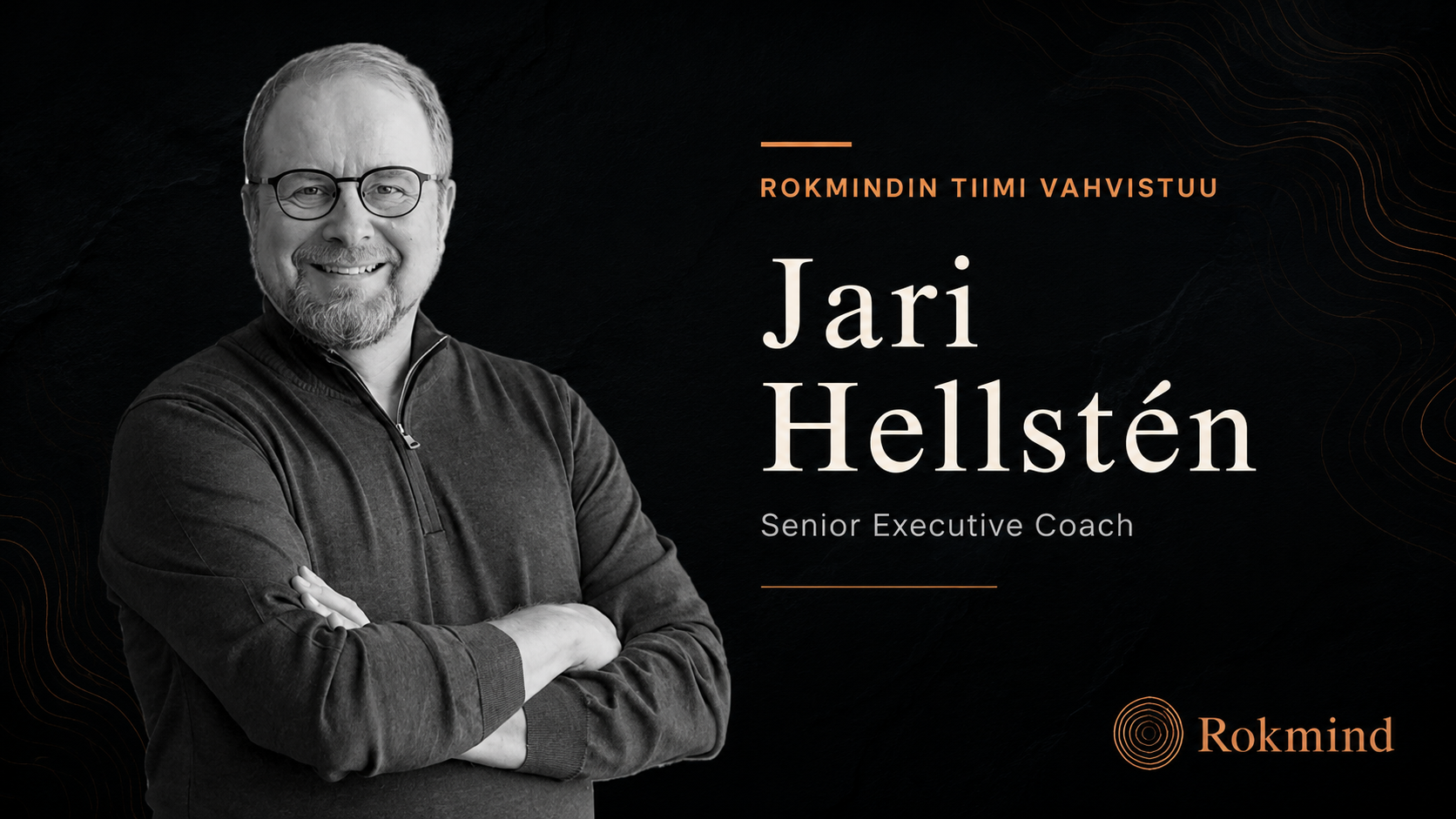
Jari Hellstén joins Rokmind as Senior Executive Coach
Rokmind’s team is growing. Jari Hellstén helps leaders and organisations bring strategy, leadership, structures and people together into a coherent whole.
Rokmind’s team grows: Jari Hellstén joins as Senior Executive Coach
Rokmind’s coaching team is strengthened by the arrival of Jari Hellstén as Senior Executive Coach. Jari helps leaders, executive teams and workplace communities understand complex situations, find their underlying causes and build solutions that work for both the business and its people.
Organisational renewal rarely stalls simply because competence or good plans are missing. The challenge more often concerns how strategy, structures, leadership practices, culture and people’s everyday experience can work in the same direction.
Jari Hellstén’s strength lies in understanding these connections. He helps clients make complex situations understandable, identify the relationships that matter and find the changes that can make a real difference.
Systems thinking helps you look beyond the symptoms
Jari’s work combines systems thinking, analytical sharpness and a strong understanding of people.
In practice, systems thinking means examining an individual challenge in relation to the rest of the organisation. A problem with cooperation, for example, may reflect more than interaction between people. Its roots may lie in unclear roles, conflicting objectives, ineffective decision-making or leadership structures that pull people in different directions.
Jari helps leaders and workplace communities see how decisions, practices and different parts of an organisation affect one another. The aim is to identify concrete changes that can improve cooperation, decision-making and execution, as well as to produce useful insights.
Business and people considered together
Jari’s background combines an engineer’s analytical thinking, the business perspective of an MBA and an understanding of human motives, behaviour and interaction developed through psychotherapy studies.
He also has extensive experience in people management, organisational development, coaching workplace communities and leadership roles in sports organisations. His work has included pay and reward systems, change situations and People & Culture issues in company integrations.
This multidisciplinary background makes Jari a natural bridge between professional groups, working cultures and perspectives. He can discuss business objectives, organisational structures and the human effects of change together.
A coach who listens and challenges constructively
As a coach, Jari listens and challenges, while ensuring that difficult questions are addressed. He creates space for honest discussion and helps participants examine their assumptions, practices and responsibilities.
The work moves beyond discussion. Jari guides coaching towards decisions, clearer ways of working and changes visible in everyday practice.
His expertise is particularly valuable when an organisation needs to:
- clarify shared direction and thinking
- clarify management systems, roles and responsibilities
- strengthen cooperation within an executive team or workplace community
- deliver demanding change or integration
- develop personal leadership and interpersonal communication
Jari strengthens Rokmind’s ability to support demanding change
Rokmind’s work combines a business perspective, an understanding of people and practical delivery of change. Coaching aims to help clients build new ways to discuss, decide, lead and act, rather than leaving them with a single insight.
Jari’s approach to organisations as interconnected wholes strengthens this work. He helps clients connect strategy, structures and people in a way that improves decision quality, strengthens cooperation and makes change possible in practice.
At Rokmind, Jari focuses particularly on strategy, management systems, executive team and workplace development, change leadership and personal leadership.
Welcome to Rokmind, Jari!
Contact:
Jari Hellstén
Senior Executive Coach
+358 40 671 9581
jari@rokmind.fi

Petri Kiikkinen joins as Senior Executive Coach
Petri Kiikkinen joins Rokmind as Senior Executive Coach, strengthening our work in sales leadership, coaching and strategy execution. He helps organisations turn strategies into everyday action, build clear practices and develop sales and leadership over the long term.
Petri is an experienced professional in sales leadership, coaching and business development. His strength is connecting strategic thinking with clear practices and practical action.
A firm belief guides Petri’s work: a good plan is not yet a job done. Results follow when a shared direction becomes everyday action, people commit to objectives and success becomes repeatable.
A strong background in sports coaching brings focus, a systematic approach and persistence to Petri’s work, the same principles that success in sales and leadership requires.
At Rokmind, Petri helps clients develop sales, leadership and working culture so that strategies move from plans into sustainable results.
It is a pleasure to welcome such an experienced, practical professional to our team.
Welcome to Rokmind, Petri Kiikkinen.
petri.kiikkinen@rokmind.fi
+358 40 500 9547
#Rokmind #SalesLeadership #CoachingLeadership

Remembering Anne Westersund: the person who changed how I think
Our dear colleague and friend Anne Westersund passed away on 12 July 2026. She helped build Rokmind: an exceptional thinker, colleague and friend whose influence lives on in our work and in us.
Over a working life, you meet many capable people.
And then you meet someone who changes the way you think.
For me, Anne Westersund was that person.
A person whose qualities went beyond her expertise
Anne joined us in building Rokmind in its early days. She brought decades of experience in international business, leadership, board work and strategic development.
Even more valuable was the way she used all that expertise.
Her CV was impressive. But what mattered most was the person she was.
Anne was one of the most intelligent people I have ever had the privilege to know. She had an exceptional ability to examine things from several perspectives at once.
Anne challenged courageously, but always constructively. Never because she wanted to be right, but because she wanted us to find a better solution together.
Every time we worked together, I learned something new.
Our coaching sessions were like a dance
Yet what I will miss most is what it felt like to work with her.
With Anne, coaching sessions were like a dance.
We understood each other from half a sentence, a glance or a small gesture. We knew when the other should continue, when to make space and when to challenge.
We never agreed on it. Over the years, it simply became our way of working together.
One of my most cherished memories is a coaching trip we took to Järvisydän.
At the end of the day, we sat beside the fire. We briefly reviewed what had happened, but before long work faded into the background.
We talked about life, friendship, family and everything that matters. We could put work aside in an instant and simply be present for one another.
Work mattered to Anne, but people always mattered more.
In the morning, everything changed again just as quickly. One cup of coffee, a few words, and we were fully back in work mode.
When she put on her board hat
And there was one more thing that still makes me smile.
I always noticed when Anne put on her “board hat”. You could see it in her bearing.
Her posture straightened slightly, her gaze changed, and before she said a word I knew which perspective we would be considering next.
We often laughed about it together.
Moments like that never make it onto a CV.
And they are precisely what friendship is made of.
Colleagues became friends
Somewhere along the way, being colleagues became friendship.
For that, I am profoundly grateful.
It is rare to meet someone who combines strategic thinking, business understanding, exceptional emotional intelligence and a sincere interest in people.
Anne made others feel that their thoughts mattered.
Anne was the best colleague I have ever had the privilege to work with.
Her passing leaves an enormous emptiness. We have lost an exceptional professional, and we have lost someone whose presence made the rest of us better.
Until her final working days, Anne made sure that our clients’ matters were in good order. She ensured that knowledge, understanding and the full picture were passed on to us.
That says a great deal about the person she was.
Anne’s influence will remain at Rokmind
Anne will not disappear from Rokmind.
Her thinking, values and way of meeting people will remain part of the work we do every day.
Our task is to continue with the same care and the same concern for people.
Thank you, Anne
Alongside grief, what I feel above all is gratitude.
Gratitude that I was able to walk such a long part of the journey beside her.
Thank you for the conversations.
Thank you for all the laughter.
Thank you for challenging me to think better.
Thank you for walking beside me.
Thank you for your friendship.
You will be missed more than words can say.
Remembering you with love and missing you deeply,
Melina "Mellu" Näätänen
CEO
Rokmind Oy

AI does not make a company smarter — it makes it a faster version of itself
AI does not automatically make a company wiser. It makes the organisation a faster version of itself, which makes its adoption, above all, a stress test of leadership, culture and decision-making.
Much of the current discussion about AI focuses on efficiency, automation and new tools. That is understandable. AI can dramatically speed up the way information is found, text is produced, analyses are developed, client work is supported and decisions are prepared.
But from a CEO’s perspective, AI’s most interesting effect goes beyond the activities it speeds up.
It lies in what happens when the organisation’s existing leadership, culture, decision-making and quality of thinking begin to scale at the speed of AI.
That is why one thing needs to be said clearly:
AI does not automatically make a company wiser. It makes the company a faster version of itself.
And that is precisely why AI is more than a technology project.
It is a stress test of leadership.
AI amplifies what the organisation already is
In a well-led organisation, AI can be an enormous asset.
When the direction is clear, responsibilities are defined, decisions are made effectively and people are allowed to learn, AI can accelerate the right things. It can free up time for better thinking, support higher-quality client work, help identify relevant information and strengthen the organisation’s ability to renew itself.
But if the organisation is confused, siloed, fearful or slow, AI will not fix it.
Quite the opposite.
It can expose the same problems more quickly.
If decision-making is already unclear, AI can create more apparent certainty without better understanding. If the culture is cautious and controlling, people may either be afraid to use AI or use it quietly on their own. If the organisation cannot share what it learns, everyone develops their own solutions in isolation. If leadership fails to set a direction, AI use can easily fragment into a series of random experiments.
It may then look as though a great deal is happening in the company.
In reality, it is simply moving faster without a shared direction.
And that is a dangerous combination.
Speed without thought is no competitive advantage
One of the greatest risks of AI is not that it goes unused.
It is that it is used extensively, without enough thought.
AI makes it very easy to produce polished content. Reports, summaries, draft strategies, client messages, presentations and analyses can be created in an instant.
That can be excellent.
But it can also create a new illusion: the organisation begins to look smarter than it is.
Well-crafted text does not necessarily reflect clear thinking. A long report does not necessarily contain sound analysis. A quick answer is not necessarily the right answer. A fluent presentation does not necessarily mean the difficult questions have actually been addressed.
This is where leadership becomes more important, rather than less.
The easier it becomes to produce things, the more important it is to be able to ask:
What matters here?
What is this based on?
What do we still not know?
Which decision does this actually support?
What consequences could this have for people, clients or the business?
AI can speed up the work.
But it does not relieve leaders of the responsibility to think.
Quite the opposite.
It requires them to think better.
AI reveals an organisation’s ability to learn
One of the most interesting things about AI is how quickly it reveals an organisation’s actual ability to learn.
Not the version described at strategy days and in speeches.
The version that shows up in everyday work.
What happens when a new opportunity appears?
Is it banned at first? Is everyone allowed to experiment with whatever they like? Does it become a large, cumbersome project before anyone has even understood where it could be useful? Or is a safe, clear and purposeful approach to learning together put in place?
An AI culture does not emerge simply because an organisation buys a tool.
It emerges through the way people learn to use that tool sensibly, safely and purposefully.
That requires more from leaders than enthusiasm. It takes the ability to establish ground rules without stifling experimentation; to discuss risks without creating fear; and to encourage learning without leaving everything to individual interest.
A healthy AI culture is not the Wild West.
Nor is it a locked door.
It is learning with leadership.
Middle management takes on a crucial role
Discussions about AI often focus on senior leaders, boards or technology specialists.
But practical change very often happens through middle management.
Middle managers see the everyday work, people’s uncertainties, friction in processes and the places where AI could be genuinely useful. At the same time, they face competing pressures: expectations of efficiency and renewal from above, and questions, concerns and practical problems from their teams.
AI is therefore also changing the everyday work of leadership.
In future, the value of middle management cannot rest solely on passing on information, reporting or administrative coordination. AI will inevitably change those activities.
Value will increasingly come from a manager’s ability to clarify direction, set priorities, create psychological safety, help people learn and distinguish what matters from what does not.
In other words, in the age of AI, good leadership becomes more human, not less.
As tools become faster, people’s need to understand where we are going and why does not disappear.
It grows.
Boards and leadership teams need to ask better questions
Leading the use of AI does not mean that every board or executive team member must know how to use every new tool.
But they do need to understand what is happening in the organisation.
In many companies, AI use is currently advancing faster than the leadership of that use. People are experimenting, teams are developing their own practices and individual specialists are building solutions to support their work, but the overall picture is missing.
This is more than an opportunity.
It is also a risk.
Leadership teams and boards should ask at least the following questions:
Which important business objectives is AI being used to support?
Where is it already being used?
Who is responsible for the principles governing its use, its safety and the necessary capabilities?
How do we ensure that people understand both the opportunities and the limitations?
How are lessons and good practices shared across the organisation?
How do we prevent AI from simply increasing busyness, superficiality or uncontrolled activity?
These are not primarily IT questions.
They are leadership questions.
And if they are not asked, the organisation may not stand still.
It may instead move very quickly, but in the wrong direction.
Companies are dividing into two groups
AI will increasingly divide organisations into two groups.
The first sees AI primarily as an efficiency tool. It is used to accelerate existing work, produce more, reduce the time required and get more out of the same organisation.
This can bring benefits.
But if the thinking stops there, AI becomes a turbocharger for the old operating model.
The second group sees AI more broadly as a means of supporting organisational learning, decision-making and renewal.
These organisations ask more than:
“How can we do this faster?”
They also ask:
“Are we doing the right things?”
“How can we understand the client better?”
“How can we manage knowledge more wisely?”
“How can we free up people’s time for thinking, human interaction and better decisions?”
“How can we build a competitive advantage that others cannot copy simply by adopting the same tool?”
The technology may be the same.
But leadership determines what it produces.
AI is no shortcut to wisdom
AI can give an organisation a great deal more capacity.
But capacity is not the same as wisdom.
An organisation can produce more while understanding less. It can respond faster while listening less well. It can automate a great deal while becoming less clear in its leadership. It can look modern from the outside while being completely unprepared within.
That is why AI is no shortcut to good leadership.
It is a mirror.
And it is also an accelerator.
It reveals what is really present in the organisation and begins to reproduce it more quickly.
If there is clarity, trust, an ability to learn and sound decision-making, AI can strengthen them.
If there is confusion, fear, silos and superficial thinking, AI can strengthen those too.
This is the point at which a leader should pause.
And ask more than:
“What could we do with AI?”
The question to ask is:
“What kind of organisation will we become when our current ways of thinking and working gain the speed of AI?”
Ultimately, the question reaches beyond technology
The AI discussion needs technological expertise. It needs information security, legal expertise, processes and practical tools.
But if the discussion stops there, our perspective is too narrow.
The real question is much larger.
How does the organisation learn? How does it make decisions? How does it handle uncertainty? How does it lead change? How does it build trust? How does it ensure that speed does not replace understanding?
AI does not automatically make a company smarter.
It makes the company a faster version of itself.
AI adoption is therefore more than a technological shift. It tests leadership, culture and the organisation’s ability to think.
And perhaps that is precisely why it matters so much.
Because, ultimately, AI asks a company more than which tools it uses.
It asks:
Do you really understand how you lead?
Melina “Mellu” Näätänen
CEO, Rokmind

AI does not change companies — it reveals them
The greatest risk is not that you fail to use AI. It is what AI reveals about the way you lead.
Almost everyone asks the same question:
How should we use AI?
Far fewer ask the more important question:
What does AI reveal about us?
This is a conversation too many people avoid.
AI is often discussed as an opportunity: greater efficiency, automation and new business models.
All of that is true.
But it is not what makes AI such a significant development.
AI’s real effect is simpler, and more uncomfortable:
It makes visible how well a company is actually led.
In a well-led company, AI multiplies the impact
When the strategy is clear, decisions are made effectively and people understand the direction, AI does one thing:
It speeds up what already works.
- Decisions are made faster
- Processes develop more systematically
- People know how to use new tools appropriately
- Investment goes where it makes a difference
In an organisation like this, AI does not create chaos.
It strengthens competitive advantage.
In a poorly led company, AI does the same thing, in the other direction
If the direction is unclear, decisions are slow and responsibilities are vague, AI does exactly the same thing:
It speeds up what does not work.
- Experiments emerge, but no one leads the overall effort
- Tools are introduced without a shared rationale
- Leaders react rather than provide directionPeople become frustrated or ignore the change altogether
From the outside, the result looks like activity.
In reality, the organisation loses its direction even faster.
This is why AI is not an IT project
Many companies start in the wrong place.
They buy a tool.
They launch a pilot.
They ask a supplier what they should do next.
But AI does not fix leadership.
It reveals it.
If a company lacks the ability to:
- set priorities
- lead change
- evaluate investments
- build a shared direction
no technology will solve that problem.
From an owner’s perspective, this is a central issue
AI maturity is no longer just an operational matter.
It is part of a company’s value.
Investors and buyers look beyond the technology you use.
They look at how it is led.
And this is where differences emerge.
Companies whose leaders can make decisions amid uncertainty quickly build a lead.
Companies that wait for clarity before acting fall behind, even when they have sufficient resources.
An honest question that should not be ignored
When you look at your organisation today, the question is not:
“Have we adopted AI?”
It is:
“What would AI reveal about the way we lead this company?”
The answer says more about future competitiveness than any single technology decision.
Closing thoughts
AI does not change companies overnight.
But it accelerates their development in the direction they are already taking.
The most important question is therefore not which technology you choose.
It is the kind of leadership that technology will reinforce.
Melina “Mellu” Näätänen
CEO, Rokmind
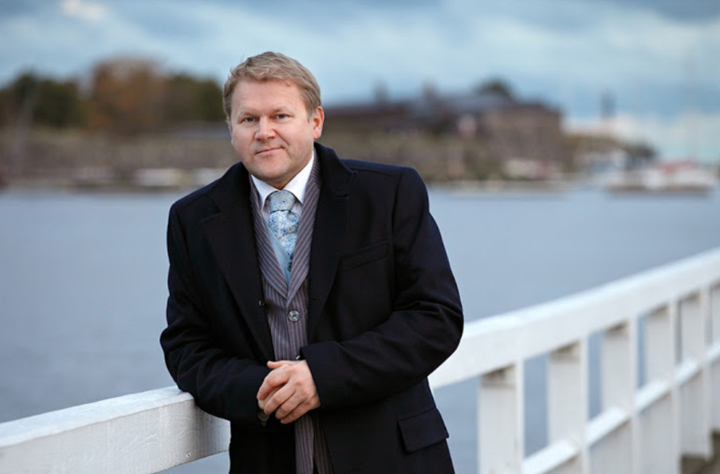
Mertsi Lanki joins as Senior Executive Coach, strengthening board and executive team development and strategic dialogue
Rokmind is strengthening its expert network as experienced executive coach Mertsi Lanki joins as Senior Executive Coach. Mertsi brings more than 20 years of international experience in growing businesses and developing strategy.
A focus on board work and owner value
Mertsi’s role focuses particularly on supporting owners, boards and executive teams. He helps clarify board work and ensure that strategic choices are implemented effectively throughout the organisation. At the heart of his work are better decision-making and a focus on what matters in leadership.
AI as part of the strategic toolkit
Amid technological change, Mertsi offers leaders practical dialogue on strategic leadership in the age of AI. The aim is to identify competitive advantages enabled by AI and connect them to sustainable, profitable business, rather than pursue digitalisation for its own sake.
Concrete results with Rokmind’s frameworks
The coaching draws on Rokmind’s established frameworks, designed to improve organisational performance. Mertsi’s experience across sectors keeps the work practical and focused on results.
The outcomes of working together are:
- Stronger board work and clearer decision-making.
- Faster strategy execution.
- Better returns on capital and greater competitiveness.
Would you like to improve the performance of your executive team or board?
Contact Mertsi or book a meeting with him: mertsi@rokmind.fi +358 44 961 0476

Does AI lead, or do people lead with AI?
AI is changing decision-making, but leadership still depends on people’s ability to create direction, meaning and commitment.
AI is a tool, not a leader
AI has quickly reached the agenda of every executive team.
We hear about leading with AI, AI-driven decision-making and AI strategies.
The discussion is necessary and timely.
But we should also pause over one essential question: who is actually leading?
AI does not lead.
It does not build trust.
It does not create meaning.
It does not get people to commit to a shared direction.
AI is, above all, a tool.
A store of information.
An analyst.
A thinking partner.
The world’s most efficient assistant.
It can collect, combine and clarify information faster than ever before.
It identifies patterns, suggests options and highlights trends that a person working alone would not have time to spot.
This is where leadership begins
What does this mean for us, and what do we do now?
AI does not answer that question.
A person does.
AI can generate options.
The leader chooses the direction.
AI can show trends.
The leader explains what they mean.
AI can speed up decision-making.
The leader takes responsibility.
AI does not remove the need for leadership. It raises the standard required.
The age of AI calls for better leadership, not less.
A greater ability to make sense of the whole.
More courage to set priorities.
More skill in connecting with people and creating meaning amid uncertainty.
In the age of AI, competitive advantage comes from people
Real competitive advantage in the age of AI does not come from buying the most powerful tools.
It comes from knowing how to bring together:
- the information AI produces
- the meaning people experience
- and a culture in which strategy consistently turns into action
Ultimately, people do not follow data.
They follow a direction and a sense of purpose
that they feel part of.
The decisive question is therefore not whether AI leads.
It is how people lead with AI.

All problems are leadership problems — but why?
Leadership involves more than administration or decision-making. It brings together psychology, sociology, systems thinking and philosophy.
Leadership is one of humanity’s oldest and most important skills. But could all problems in an organisation ultimately be leadership problems? That idea may meet resistance, yet it also offers a significant opportunity for development.
Leadership through the lens of different disciplines:
Leadership involves more than administration or decision-making. It brings together psychology, sociology, systems thinking and philosophy. Consider these different perspectives:
*The psychological perspective: people bring their inner world to work. Being seen, heard and valued is a basic human need (Goleman, 2017). A leader’s task is to understand what motivates employees and how their experiences affect their behaviour.
*The sociological perspective: workplaces are ecosystems. Organisational culture and group dynamics influence how well people can work together (Schein, 2016). If one team member is struggling, it may be a sign of wider structural problems.
*Systems thinking: problems do not exist in isolation. Systems thinking holds that every part affects the whole (Meadows, 2008). For example, a decline in someone’s ability to cope at work affects the individual, the team’s performance and the working atmosphere.
*The philosophical perspective: a leader’s responsibility is an ethical question. Leadership always involves a choice of values: do you treat people as means to an end or as individuals with intrinsic worth? Values-based leadership is both a moral issue and a factor affecting productivity (Brown, Treviño & Harrison, 2005).
Lessons in winning and failure from sport
Sport offers useful analogies for leadership. A poor coach, for example, blames a player for a mistake, while a good coach helps the player understand what they could do better. The same applies at work: a good leader supports learning and development as well as monitoring performance.
People are whole individuals, and leaders should recognise that
Wellbeing is built on a balance between work, health and life outside work. When one of these suffers, the effects also show up in the workplace.
Exercise: Ask your employees:
- How are you feeling at the moment?
- What excites you about your work?
- What support would help you succeed?
Small gestures can have a significant effect on wellbeing at work.
When there are many people to lead
In a large organisation, it is impossible for a leader to connect personally with every employee. Systematic practices can help:
- Regular development conversations
- Anonymous feedback surveys
- Clarifying the organisation’s values
You cannot save everyone, and recognising that is part of leadership
If an employee is in the wrong role or unable to fulfil their responsibilities, a leader’s task is to help them find solutions, such as further training, changes to their job or a new career path. When these matters are addressed honestly and respectfully, everyone benefits.
Leadership is continuous growth
Leadership is a learning process. Every problem offers an opportunity to develop yourself and the organisation. A good leader looks for solutions rather than someone to blame.
References:
- Brown, M. E., Treviño, L. K., & Harrison, D. A. (2005). Ethical leadership: A social learning perspective.
- Goleman, D. (2017). Leadership: The Power of Emotional Intelligence.
- Meadows, D. (2008). Thinking in Systems: A Primer.
- Schein, E. H. (2016). Organizational Culture and Leadership.

Conflict as a resource in leadership and business
Managing conflict means more than putting out disagreements. It means recognising opportunities to learn, develop and innovate.
Conflict is a word that often carries negative associations. Leaders and business professionals frequently try to avoid disagreements because they are readily seen as a threat to organisational efficiency, collaboration and morale. But what if conflict were viewed as a resource: an opportunity to develop the organisation, improve leadership and find innovative solutions?
The dynamics and leadership of conflict
When an organisation’s strategy and shared, inspiring goal are clear, conflict need not be destructive. It can become a force that moves the organisation towards its goal. When everyone wants to move in the same direction, different perspectives can enrich discussion and lead to better solutions. In this environment, conflict can help refine decisions and make work more effective. Conflict often emerges when different views, goals or values meet. It can create tension while also bringing new perspectives and innovation. Constructive conflict management includes facilitating dialogue in which people have a safe space to express their opinions without fear of being labelled.
A leader needs to show empathy, listen actively and ensure that the conflict moves towards shared understanding. At the same time, they must be able to challenge those involved to examine their assumptions and motives. Not every conflict needs to be resolved immediately: sometimes a tension that is consciously acknowledged can lead to new breakthroughs.
Exercise: analysing and guiding conflict
- Identify a conflict: Write down a conflict you have encountered in your organisation.
- Analyse the people involved and their interests: What are their goals, and how do those goals differ?
- Assess the type of conflict: Is the disagreement strategic, operational or personal?
- Choose an approach: Can you facilitate a dialogue that leads to better understanding and a shared solution?
- Assess the outcome: Did the conflict remain unresolved, or did it produce new insights and ways of working?
How individuals and teams develop through conflict
For individuals, conflict can be a powerful means of development. Challenging situations require people to examine their behaviour and communication skills. Conflict can also support the development of emotional intelligence as people learn to understand others’ feelings and needs more fully.
For teams, conflict can lead to higher performance when it is managed well. This requires the ability to address disagreements openly and constructively. Teams that learn this skill can achieve greater trust and shared responsibility.
Closing thoughts
Leaders need to create a culture in which different opinions can flourish without fear of negative consequences. Managing conflict means more than putting out disagreements. It means recognising opportunities to learn, develop and innovate.
References:
Gelfand, M. J., Leslie, L. M., Keller, K. M., & de Dreu, C. K. W. (2012). “Conflict cultures in organizations: How leaders shape conflict cultures and their organizational-level consequences.”
Goleman, D. (1995). Emotional Intelligence: Why It Can Matter More Than IQ.
Heifetz, R. A., & Linsky, M. (2002). Leadership on the Line: Staying Alive Through the Dangers of Leading. Harvard Business School Press.

Leadership is a mental game — a psychological approach to modern leadership
Why do some leaders succeed while others fail? Strategy, processes and financial figures are only part of the picture. Leadership is also a psychological game.
Leadership is a psychological game — are you ready to win?
As a leader, have you ever wondered why some leaders seem to bring people with them effortlessly, while everything around others seems to get stuck?
The difference is not in strategies, processes or organisational charts. It is in who understands the human mind and who does not. Leadership is more than business: above all, it is a psychological game. Every decision, every reaction and every moment of non-verbal communication influences how people around you behave.
Psychologically informed leadership: why does it matter more than ever?
A modern leader cannot rely on old-fashioned chains of command and control. Successful leadership instead rests on psychological understanding:
- The ability to influence people without issuing orders.
- The skill to read a situation and adapt your behaviour accordingly.
- A deep understanding of what motivates and guides people’s actions.
Leadership is like chess: you cannot move every piece in the same way. Everyone is different. If you lead everyone using the same method, you are not leading anyone appropriately.
Three psychological strengths in leadership
1. Self-leadership: psychological self-regulation
All leadership begins with self-leadership. Ask yourself:
- Am I aware of my strengths and weaknesses?
- How do I respond to pressure and uncertainty?
- Do I recognise and regulate my emotions, or do they control me?
If you cannot manage yourself, you cannot manage others. An unstable leader creates an unstable organisation.
Exercise: Keep a diary of your reactions in stressful situations for a week. What do you learn about yourself?
2. Understanding people: the psychology of behaviour in leadership
Understanding people is at the heart of leadership. Do you know why your team members act as they do, or are you making assumptions?
Three psychological forces that guide employees:
- Safety: People cannot shine if they experience constant uncertainty at work.
- Meaning: People want to feel that their work matters.
- Competence: People are motivated when they feel capable and see themselves developing.
Exercise: Ask each member of your team in a one-to-one conversation:
- Does your work feel safe?
- Do you feel that your work is meaningful?
- Do you have opportunities to develop and grow?
Listen. Do not assume.
3. Decision-making: the psychological strength to win the game
Outstanding leaders make the right decisions at the right time. A psychologically strong leader:
- Understands that complete information is never available.
- Avoids analysis paralysis, draws on experience and understands their tolerance for risk.
- Understands the emotional effects of decisions on the team and organisation.
Poor leaders put off decisions because they fear mistakes. Good leaders know that mistakes are inevitable, but uncertainty must not bring action to a halt.
Exercise: List five decisions you put off last week. Make three of them today.
Closing thoughts
Why do some leaders succeed while others fail? Strategy, processes and financial figures are only part of the picture. Leadership is also a psychological game.
A successful leader:
- Can manage themselves and their reactions.
- Understands people’s deepest motivations and knows how to lead with that understanding.
- Makes decisions with courage and at the right time.
Leadership is not simple, but it can be learnt. If you do not understand psychology, you do not understand leadership.
References:
- Cuddy, A. J., Kohut, M., & Neffinger, J. (2013). “Connect, Then Lead”. Harvard Business Review.
- Goleman, D. (2017). Leadership: The Power of Emotional Intelligence.
- Kahneman, D. (2011). Thinking, Fast and Slow.
- Rock, D. (2020). Your Brain at Work.
Your next perspective is still waiting to be found.
Try another search term or clear the filters.
What idea will help
you move forward?
Open a topic that interests you and compare perspectives. What does an observation mean in your situation, what does it challenge and what would you like to understand better? Explore a few posts at a time and go deeper at your own pace.
Executive teams
Shared direction, collaboration and the aspects of executive team work that deserve a closer look.
Leadership
Perspectives on leadership, understanding people and everyday choices that make a difference.
Culture and communication
Ideas about feedback, conversation and the ways of working that build a shared culture.
AI and working life
What does AI change in leadership, and what does it reveal about people and organisations?
Reward and pay transparency
Connections between reward, fairness and the quality of leadership.
News from Rokmind
News, people and moments from Rokmind’s story.
VIDEOS & VIDEO PODCASTS
Ideas
worth giving
a moment.
Conversations about leadership, people and change. Longer perspectives and brief pauses, whenever it suits you.
Try watching without soundViewing demonstration. The sample video is not a Rokmind publication.
Back to articles ↑thinking.VIEWING DEMONSTRATION Sound initially off
An invitation to pause
and think together.
FROM THOUGHT TO ACTION
What could this mean
in your everyday work?
A useful perspective is a starting point. Its value emerges when you consider it in your own situation. Explore relevant training topics, read our clients’ experiences or continue the discussion with us.